Updated for 2026 to reflect current legal standards and best practice in England & Wales.
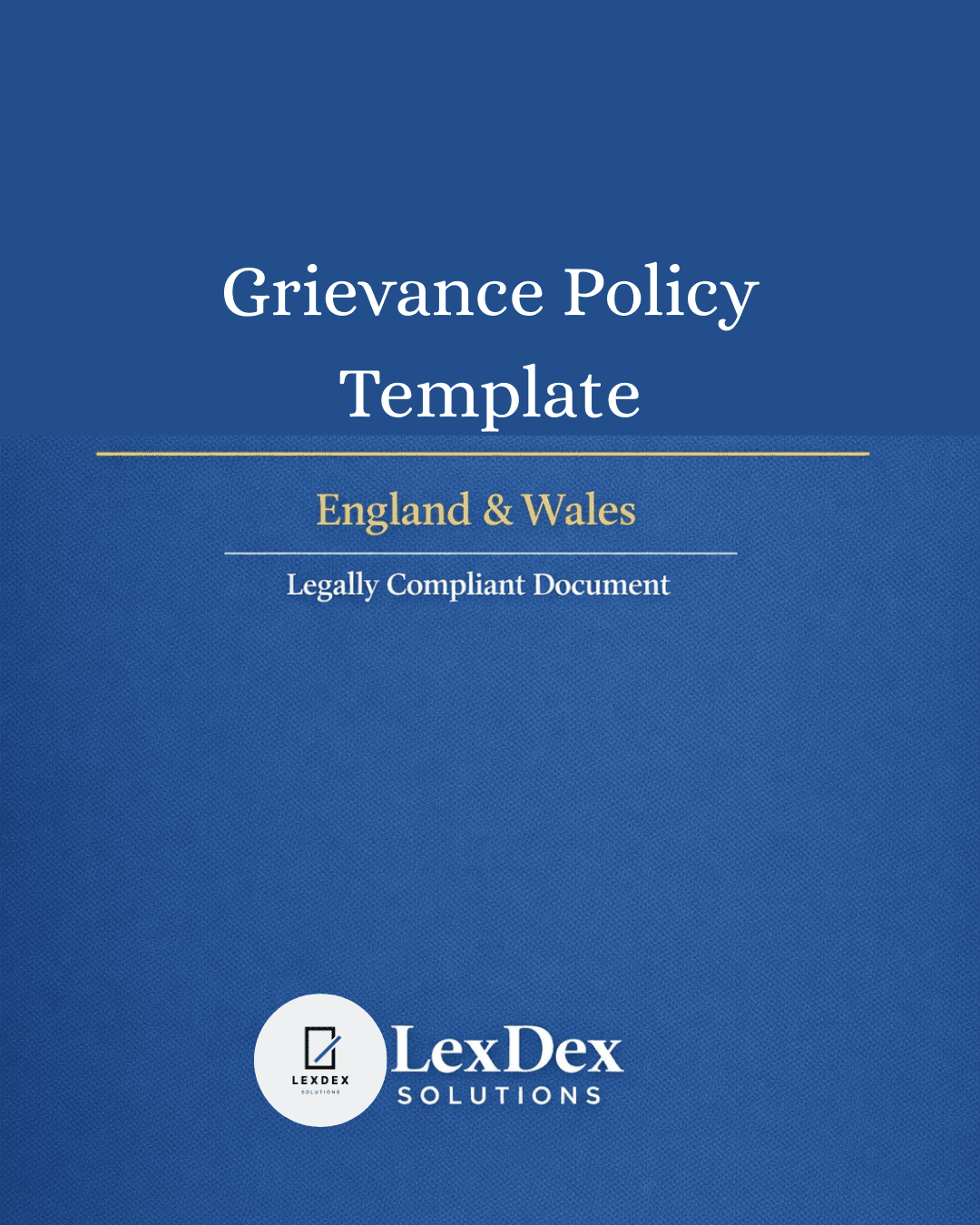
UK Staff Grievance Policy Template
£29.99
Staff Grievance Policy Template (UK)
Ensure fairness, transparency, and legal compliance in the workplace with our Staff Grievance Policy Template (UK). This UK staff grievance policy template provides a comprehensive framework for employees to raise concerns, outlines structured investigation and resolution procedures, and guides managers and HR teams on legally compliant handling of grievances.
Designed for HR teams, managers, and legal advisers, this Grievance policy template aligns with UK employment law, including the Employment Rights Act 1996 and the ACAS Code of Practice on Disciplinary and Grievance Procedures, ensuring that complaints are managed fairly, consistently, and transparently. This template is suitable for SMEs, corporates, and regulated sectors seeking a professional, solicitor-style approach to grievance management.
Why Use This Staff Grievance Policy Template?
Structured Complaint Management
Provides a step-by-step process for employees to raise grievances and for managers to investigate and resolve them consistently.
Legal Compliance & Risk Mitigation
Reduces the risk of employment tribunal claims or allegations of unfair treatment by providing a clear, legally grounded framework.
Practical & Customisable
Fully editable to reflect company size, sector, and specific organisational needs, including confidential reporting and escalation pathways.
Professional Drafting
Written in solicitor-style language suitable for HR teams, line managers, and legal advisers, enhancing internal credibility and external enforceability.
Employee Confidence & Trust
A transparent grievance process builds trust, improves morale, and fosters a positive organisational culture.
Who Should Use The Grievance Policy Template?
HR teams responsible for workforce compliance and dispute management
Line managers supervising departments or teams
Directors and executives ensuring consistent grievance resolution across the organisation
Legal advisers reviewing HR procedures for statutory compliance
SMEs and large organisations seeking to standardise complaint handling
Key Features
UK-compliant grievance procedures referencing Employment Rights Act 1996 and ACAS Code of Practice
Steps for informal and formal grievance submissions
Investigation protocols, timelines, and responsible parties
Escalation and resolution processes for complex or repeated complaints
Guidance on documenting outcomes, maintaining confidentiality, and follow-up actions
Integration with related HR policies, including disciplinary, anti-harassment, whistleblowing, and attendance policies
Employee and manager obligations clearly defined
Step-by-Step Instructions
Define Grievances Clearly – Outline what constitutes a formal complaint, including workplace conduct, discrimination, harassment, or procedural concerns.
Provide Multiple Reporting Channels – Include informal and formal methods for raising grievances, such as written submissions or HR consultations.
Assign Investigation Responsibilities – Designate HR officers or managers to conduct impartial investigations.
Document Evidence Thoroughly – Keep detailed records of statements, meetings, and correspondence in line with data protection obligations.
Ensure Timely Resolution – Set realistic timelines for each stage of the grievance process.
Implement Follow-Up Actions – Communicate outcomes clearly, including corrective measures or policy changes.
Review and Update Regularly – Ensure procedures remain compliant with the Employment Rights Act 1996 and ACAS guidance.
Practical Examples
An employee raises a complaint about unfair workload distribution; HR follows the template’s structured investigation steps to gather statements, assess fairness, and provide written outcomes.
Line managers use the policy to document meetings and decisions, ensuring consistency across departments.
Legal advisers review the template to verify statutory compliance and minimise risk of tribunal claims.
SMEs implement the template to maintain a fair and transparent grievance process without bespoke drafting.
Large corporates integrate the template into wider HR procedures, ensuring alignment with disciplinary and whistleblowing policies.
Organisations in regulated sectors adopt the policy to satisfy compliance audits and internal governance standards.
Risks If Not Used
Inconsistent handling of employee complaints
Increased likelihood of employment tribunal claims for unfair treatment
Poor employee morale and loss of trust
Legal non-compliance with UK employment law and ACAS guidance
Operational disruption due to unresolved disputes
Reputational damage and internal conflict
FAQs
Q: What is a staff grievance policy?
A formal HR grievance policy outlining procedures for employees to raise complaints and for management to investigate, resolve, and document them fairly and consistently.
Q: Is this template suitable for all UK workplaces?
Yes — drafted to comply with UK employment law and the ACAS Code of Practice, it applies to SMEs, large corporates, and regulated sectors.
Q: Who should use this UK staff grievance policy template?
HR teams, line managers, directors, and legal advisers managing employee complaints, disputes, and workplace fairness.
Q: Can this policy cover discrimination or harassment complaints?
Yes — it provides guidance for handling sensitive grievances, including bullying, harassment, discrimination, and unfair treatment.
Q: How does this template support best HR practices?
By providing a transparent, step-by-step grievance procedure, it ensures fairness, consistent treatment, and compliance with UK employment law.
Q: What legislation governs this policy?
Key legislation includes the Employment Rights Act 1996 and the ACAS Code of Practice on Disciplinary and Grievance Procedures.
Q: How often should the policy be reviewed?
Regular updates are recommended to reflect legislative changes, evolving workplace standards, and organisational requirements; this version is current for 2026.
Q: Can this template be integrated with other HR policies?
Yes — it complements disciplinary, whistleblowing, attendance, and anti-harassment policies to ensure a consistent HR framework.
Q: How does it help prevent disputes?
Clear procedures, documented investigations, and structured escalation reduce misunderstandings, ensure fairness, and mitigate legal risk.
For a bespoke version of this document ask for a free quote

Only logged in customers who have purchased this product may leave a review.





Reviews
There are no reviews yet.