Updated for 2026 to reflect current legal standards and best practice in England & Wales
By Eve, Founder of LexDex Solutions, LLM, GDPR Practitioner
20+ years’ experience in privacy compliance, data protection, and corporate legal frameworks.
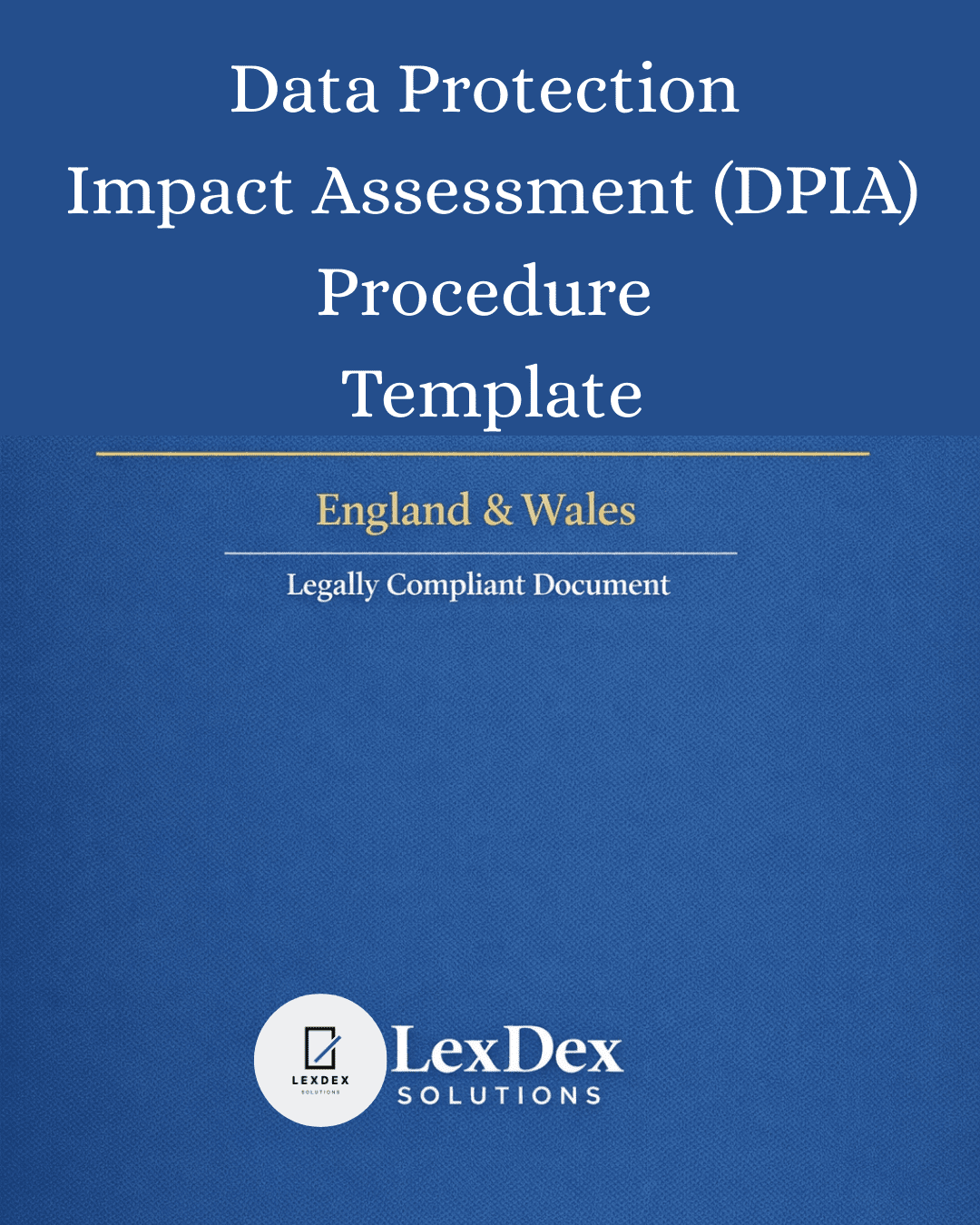
£29.99
A Data Protection Impact Assessment Procedure is a formal organisational governance document that establishes the structured framework, steps, and responsibilities for identifying, assessing, and mitigating the risks associated with processing personal data in high-risk contexts. The procedure defines how employees, data protection officers, contractors, and third parties should evaluate processing activities to ensure they comply with the UK General Data Protection Regulation (UK GDPR) and the Data Protection Act 2018.
Organisations implementing DPIA frameworks must ensure compliance with the UK GDPR, Data Protection Act 2018, and sector-specific regulations such as the Financial Services and Markets Act 2000 (FSMA) where applicable. The procedure provides a structured method for assessing high-risk processing activities, reducing regulatory, operational, and reputational risk, and maintaining accountability for all parties involved.
Under UK data protection law, organisations are required to implement technical and organisational measures to minimise risks to data subjects’ rights and freedoms. DPIAs are mandatory under Article 35 of the UK GDPR for processing likely to result in high risk, such as large-scale profiling, processing sensitive special category data, or introducing new technologies that may impact individuals’ privacy. A Data Protection Impact Assessment Procedure helps organisations systematically document risk assessments, mitigation measures, and approvals to demonstrate accountability and due diligence.
Regulatory authorities, including the Information Commissioner’s Office (ICO), emphasise the importance of robust DPIA governance. Failure to conduct or properly document a Data Protection Impact Assessment Procedure can result in enforcement action, fines, and reputational damage, particularly in cases involving large-scale data breaches or unlawful processing.
This DPIA Procedure template establishes a comprehensive governance framework covering identification of processing activities, assessment of privacy risks, mitigation strategies, consultation with the ICO where necessary, documentation, and regular review. By implementing a structured procedure, organisations can minimise operational, compliance, and reputational risks while demonstrating adherence to UK data protection law.
The DPIA Procedure template is suitable for organisations across sectors, including technology companies, healthcare providers, financial institutions, educational institutions, public authorities, and any business processing personal or sensitive data in high-risk contexts.
UK GDPR (Article 35)
Requires organisations to conduct DPIAs for processing activities likely to result in a high risk to individuals’ rights and freedoms. The Data Protection Impact Assessment Procedure formalises risk assessment, mitigation, and accountability obligations.
Data Protection Act 2018
Reinforces obligations under the UK GDPR, specifying compliance requirements for lawful, fair, and transparent processing, particularly for special category and sensitive personal data.
Financial Services and Markets Act 2000 (FSMA)
Where applicable, organisations in the financial sector must ensure that high-risk processing, including customer profiling or credit risk assessments, complies with both data protection and regulatory obligations.
ISO/IEC 27001 and ISO/IEC 27701
Internationally recognised standards for information security and privacy provide guidance on risk assessment, mitigation, and documentation of data processing activities, supporting compliance with DPIA requirements.
Organisations processing high-risk personal data
Businesses and public authorities handling sensitive, large-scale, or technologically complex personal data can use this procedure to formally assess risks and implement mitigation measures.
Data protection officers, compliance teams, and legal advisers
Supports professionals responsible for governance, risk management, and regulatory compliance, providing a structured process for conducting and documenting DPIAs.
Technology and SaaS companies
Companies introducing new products, AI systems, or profiling mechanisms can manage privacy risks while demonstrating compliance with UK GDPR requirements.
Healthcare and research institutions
Hospitals, clinics, and research bodies processing sensitive patient or participant data can assess risks, consult with regulatory authorities, and implement safeguards.
Financial services organisations
Banks, insurers, and fintech firms processing high-risk data, including financial profiles or customer behavioral data, can formalise assessment and mitigation procedures.
Identification of processing activities
Defines scope, purpose, and lawful basis for processing, including personal and sensitive data.
Risk assessment and evaluation
Establishes methods for identifying potential risks to data subjects’ rights and freedoms, including severity and likelihood.
Mitigation measures
Documents organisational, technical, and procedural safeguards designed to reduce or eliminate identified risks.
Consultation requirements
Outlines when consultation with the ICO or internal governance teams is necessary before processing begins.
Documentation and reporting
Ensures a record of DPIAs, findings, and decisions, supporting accountability and audit readiness.
Review and monitoring
Specifies timelines and procedures for reviewing completed DPIAs, assessing the effectiveness of mitigations, and updating procedures where necessary.
Implementing a Data Protection Impact Assessment Procedure provides organisations with formal governance over high-risk personal data processing, supporting regulatory compliance and accountability.
A well-structured procedure helps organisations:
Identify high-risk processing early and implement safeguards
Reduce internal and external data privacy breaches
Demonstrate compliance with UK GDPR and Data Protection Act 2018
Support audit and regulatory inspection readiness
Strengthen operational risk management and accountability
Regulatory enforcement and fines
Failure to conduct DPIAs where required can result in ICO investigations and substantial financial penalties.
Operational and reputational harm
Unassessed high-risk processing may lead to data breaches, loss of customer trust, and reputational damage.
Non-compliance with statutory duties
Organisations may breach Article 35 of UK GDPR, risking legal action or enforcement notices.
Ineffective risk mitigation
Without a structured procedure, organisations may fail to implement adequate safeguards, increasing exposure to incidents and claims.
Healthcare Data Processing
Hospitals or research institutions introducing new electronic health record systems or AI-based diagnostic tools must conduct DPIAs to assess privacy risks. The procedure ensures patient data is securely processed, identifies potential high-risk exposures, and implements encryption, access control, and anonymisation measures.
Financial Profiling and Credit Scoring
Banks, lenders, and fintech companies assessing creditworthiness or financial behavior through automated systems must complete DPIAs. This includes evaluating the impact on customer rights, ensuring transparency, and implementing controls such as data minimisation and monitoring for algorithmic bias.
Marketing and Behavioral Analysis
Companies performing targeted advertising, customer profiling, or behavioral segmentation must evaluate risks to personal data. The Data Protection Impact Assessment Procedure ensures lawful processing, reduces the risk of complaints, and documents decisions for regulatory scrutiny.
Cloud-based High-Risk Processing
Organisations migrating sensitive personal or corporate data to cloud platforms use DPIAs to identify threats, implement encryption and access controls, and ensure accountability across multiple vendors and jurisdictions.
New Technology Implementation
Introducing AI, IoT, or automated decision-making systems requires DPIAs to comply with Article 35 obligations. The procedure helps organisations assess technical risks, define mitigation measures, and document approvals for audit readiness.
Q1: What is a Data Protection Impact Assessment Procedure under UK law?
A Data Protection Impact Assessment Procedure is a structured organisational framework that defines how to identify, evaluate, and mitigate risks associated with high-risk personal data processing. Under Article 35 UK GDPR, organisations must assess the impact of processing likely to result in high risks to the rights and freedoms of individuals. The Data Protection Impact Assessment Procedure provides clear steps for documentation, internal review, consultation with regulatory authorities if needed, and implementation of mitigation measures. It ensures operational accountability and compliance with statutory obligations while supporting risk management and regulatory inspection readiness.
Q2: Why do organisations need a Data Protection Impact Assessment Procedure?
High-risk data processing can expose organisations to regulatory fines, operational failure, and reputational damage. A Data Protection Impact Assessment Procedure formalises the process of identifying risks, evaluating potential harm to data subjects, and implementing safeguards. It also demonstrates due diligence and accountability to regulators, customers, and internal stakeholders, reducing the likelihood of non-compliance or enforcement action under the UK GDPR.
Q3: How does a Data Protection Impact Assessment Procedure support UK GDPR compliance?
The Data Protection Impact Assessment Procedure operationalises Article 35 obligations by providing a consistent methodology for assessing high-risk processing. It covers lawful basis evaluation, risk scoring, mitigation planning, and consultation procedures. By maintaining thorough records of assessments and decisions, organisations demonstrate accountability and readiness to comply with audit requirements, minimizing exposure to ICO enforcement.
Q4: When is a Data Protection Impact Assessment Procedure required?
A Data Protection Impact Assessment Procedure is required whenever processing is likely to result in high risk to the rights and freedoms of individuals. Examples include large-scale processing of sensitive personal data, profiling for automated decision-making, and new technology implementations. The procedure helps organisations determine when assessments are mandatory and ensures that high-risk processing is systematically reviewed.
Q5: Who is responsible for conducting a Data Protection Impact Assessment Procedure?
Responsibility typically rests with the Data Protection Officer (DPO), privacy or compliance teams, and relevant business units. The Data Protection Impact Assessment Procedure defines roles, responsibilities, and escalation channels to ensure accountability and regulatory compliance across the organisation.
Q6: What are the operational benefits of a Data Protection Impact Assessment Procedure?
The procedure helps organisations proactively identify privacy risks, implement appropriate mitigation strategies, and maintain operational continuity. It also reduces the risk of costly data breaches, reputational damage, and non-compliance penalties while providing a documented process for audits and regulatory inspections.
Q7: Can a DPIA Procedure be used for existing systems?
Yes. Organisations can perform retrospective DPIAs for existing high-risk systems or processes. The procedure provides steps for assessing historical risks, documenting findings, and implementing remedial measures where necessary.
Q8: How often should DPIAs be reviewed?
DPIAs should be reviewed periodically, following significant changes in processing, regulatory updates, or after new technology deployment. The procedure ensures ongoing compliance and that mitigation measures remain effective and proportionate to risk.
Q9: Why is a professionally drafted Data Protection Impact Assessment Procedure important?
A well-crafted DPIA Procedure ensures organisations comply with UK GDPR Article 35, reduces operational and legal risk, documents accountability for high-risk processing, and provides clear guidance for staff and regulators. It establishes structured steps for risk identification, mitigation, consultation, and audit readiness, supporting organisational governance and regulatory compliance.
For a bespoke version of this document ask for a free quote

Updated for 2026 to reflect current legal standards and best practice in England & Wales
By Eve, Founder of LexDex Solutions, LLM, GDPR Practitioner
20+ years’ experience in privacy compliance, data protection, and corporate legal frameworks.
Only logged in customers who have purchased this product may leave a review.




Reviews
There are no reviews yet.